
Unified inquiry database
Collect inquiries from different channels and retain the complete work history.
CRM / API
We bring customer management, statuses, roles, and data exchange into a single manageable environment without unnecessary duplicate entry.
Starting price from 2 000 000 ₸
01 / Business Challenges
We first define a valuable business outcome, then select the solution scope and tools.
Collect inquiries from different channels and retain the complete work history.
Make areas of responsibility and the next step clear to every process participant.
Set up data exchange between the website, 1C, CRM, and external services.
Prepare data for operational oversight and management decisions.
02 / Scope of Work
The final scope depends on the challenge. Before work begins, we define what is included, where the boundaries lie, and how the result will be accepted.
Assessment of processes and constraints
Data, role, and status model
Interface design
Backend and REST API
Integrations with 1C, websites, and services
Migration of agreed data
Testing, documentation, and launch
03 / Process
Each stage ends with a clear result and a decision on the next step.
Analyze roles, data sources, statuses, exceptions, and control points.
Define the data model, access permissions, interfaces, and integration contracts.
Demonstrate working modules, connect external systems, and verify data exchange.
Validate the data, train users to work with the agreed environment, and support its rollout.
04 / Estimate
The timeframe depends on the number of roles, workflows, integrations, and the quality of the source data. We define the stages and control points after the assessment.
We connect websites, applications, CRM systems, 1C, and external platforms through reliable and manageable data exchange.
from 400 000 ₸per projectWe automate inquiries, customer records, roles, statuses, reporting, and internal processes around the way your team actually works.
from 2 000 000 ₸per projectTimelines apply to the starting scope. The schedule is agreed after the brief and materials are confirmed. Complex integrations and additional modules are priced separately.
05 / Projects
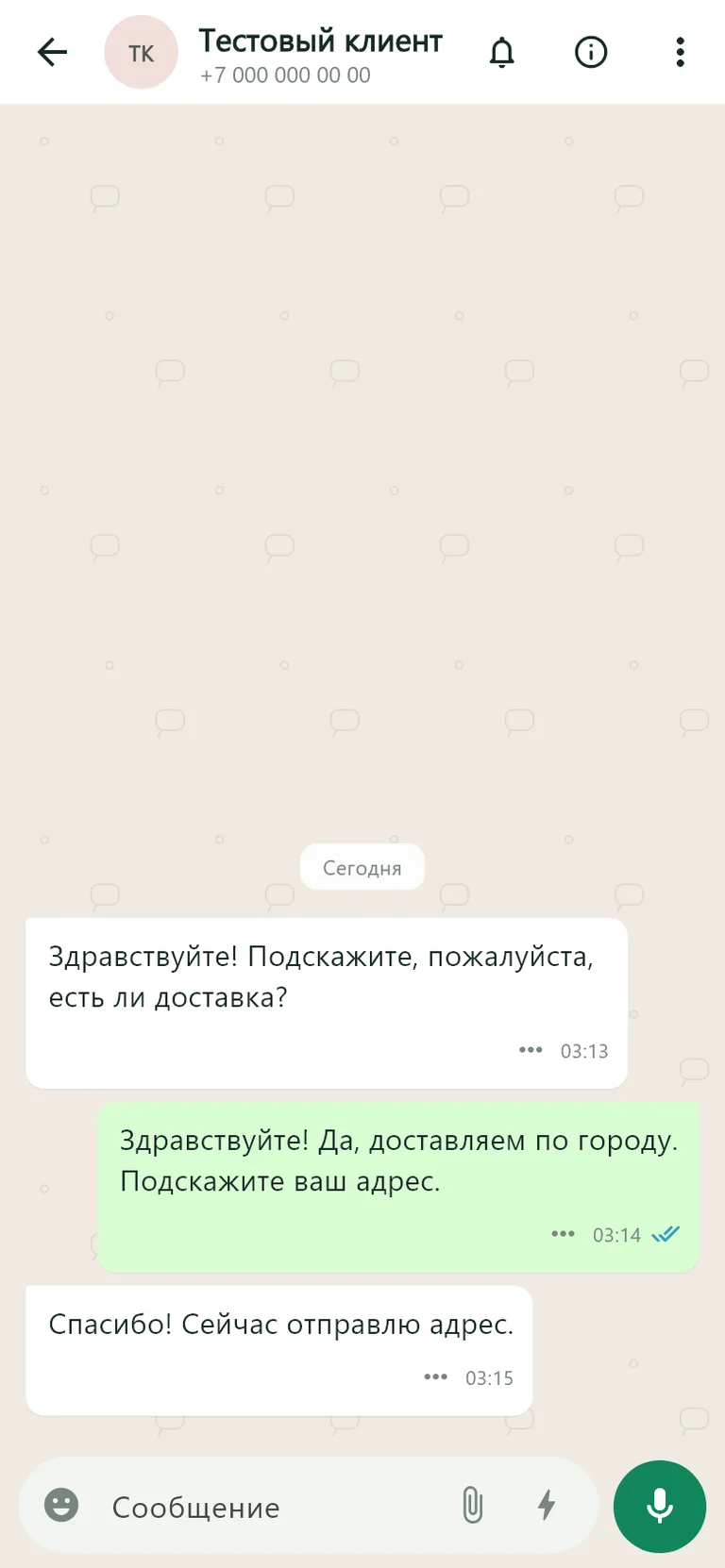
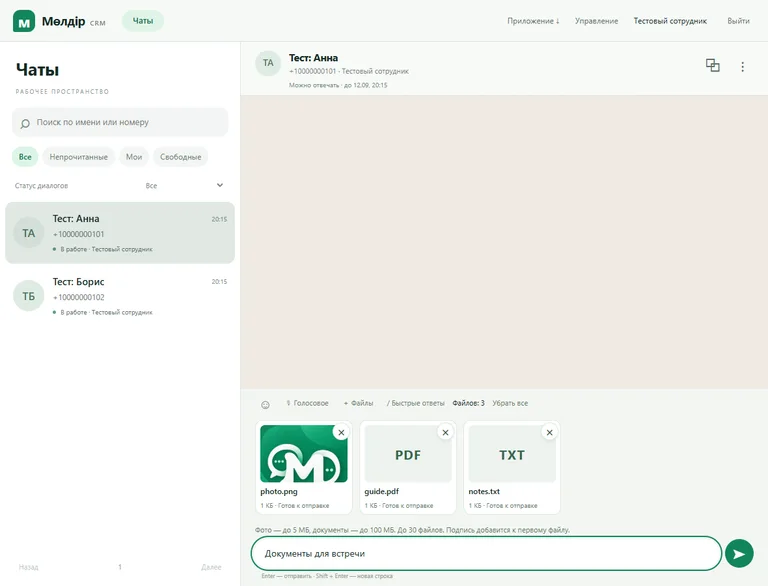
CRM · Android · Website
Customer conversations in one CRM and app.
An education website, web CRM and Android app for a team handling WhatsApp enquiries.
View case study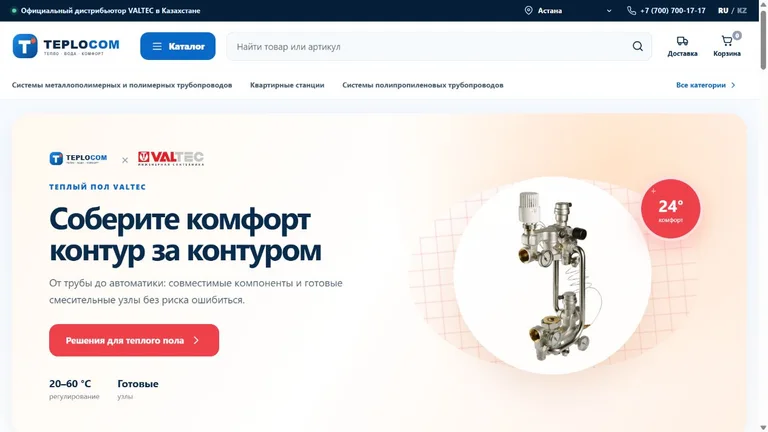
Store · CRM · Automation
Online store and retail operations in one system.
A VALTEC plumbing catalogue, product variants, checkout and a CRM for products, warehouses and delivery.
View case study06 / FAQ
When off-the-shelf products do not reflect key processes, create unnecessary manual work, or cannot securely connect the required systems.
Yes, provided they have a suitable API or another agreed data exchange channel. Before estimating the work, we review the documentation, limits, and authorization model.
We first agree on fields, data cleansing, matching rules, and a validation sample. Migration is performed as a separate, verifiable stage.
We design roles and permissions around operations and data, and log critical actions where the requirements call for it.