
Duplication
Shared mechanisms are not copied between products and do not diverge in behaviour.
Platform · Web development
A modular platform for users, licences, updates and administration.
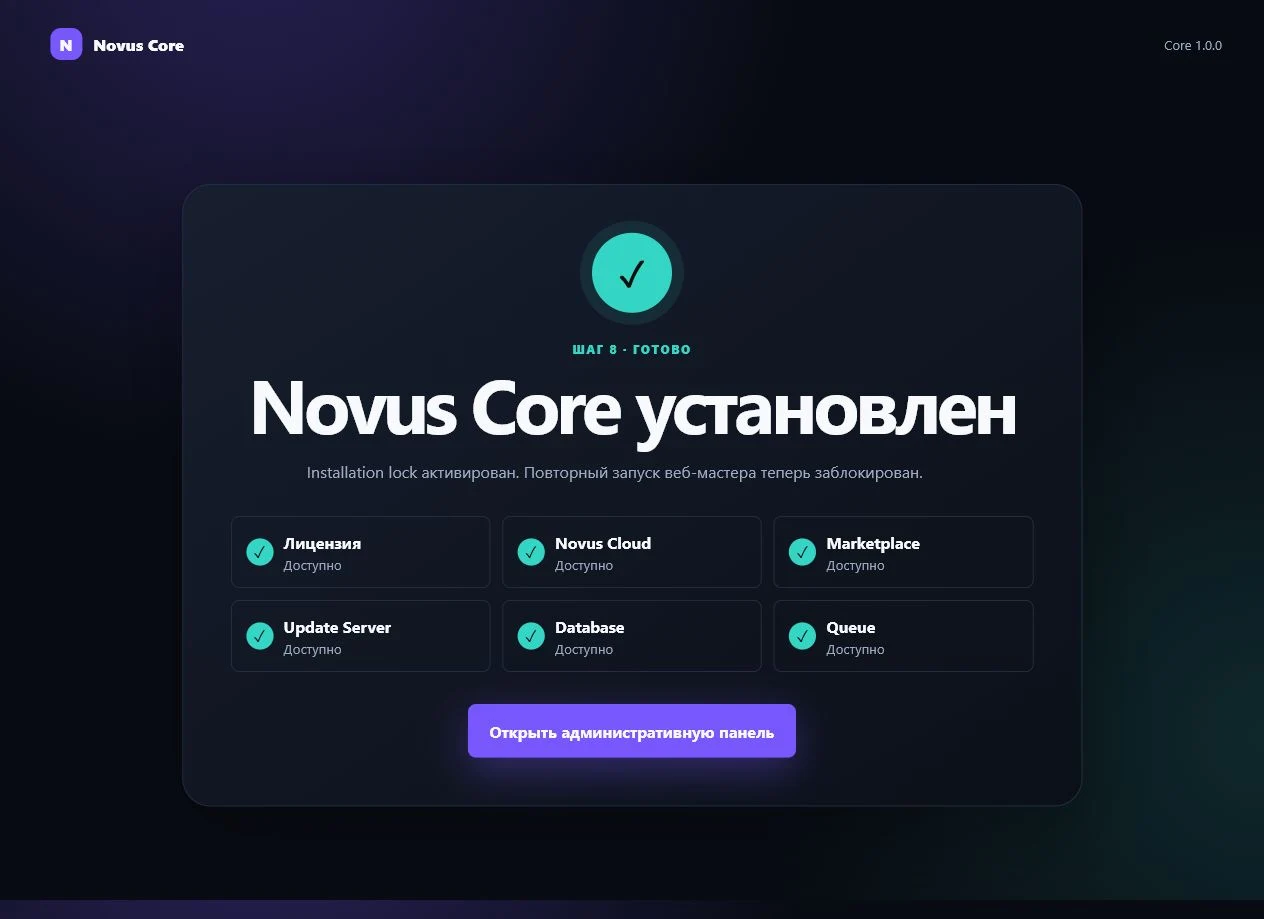
Multiple products repeat the same needs: users, licences, installation and updates. Implementing these separately makes maintenance harder.
Shared functionality lives in a common PHP core. Products connect modules through the Extension API and follow a consistent installation and update process.
New products can use an established technical foundation and focus on their business logic. Shared mechanisms are maintained in one place.
01 / Context
When every commercial product reimplements users, licensing, updates, and modules, development becomes an exercise in synchronising copies.
Novus Core moves platform responsibilities into one core. The product becomes the composition point, while domain functionality is added through independent modules and a stable public API, without Core modifications or hidden cross-module dependencies.
Shared mechanisms are not copied between products and do not diverge in behaviour.
Modules own their data and integrate only through contracts, events, or APIs.
Versions, compatibility, and rollback are validated before a new release is activated.
02 / Architecture
Core has no knowledge of product brands or business terminology. It publishes the Extension API, manages the lifecycle, and lets the product safely compose the required module set.
The public boundary for modules, products, and infrastructure adapters.
Container, HTTP, events, routing, authorisation, and extension lifecycle.
The product selects modules, settings, and its shell without modifying Core source code.
03 / Capabilities
The core handles recurring platform tasks so product teams can build domain value instead of maintaining their own infrastructure copy.
Eight steps: environment, database, Cloud, licence, configuration, administrator, migrations, and repeat-run lockout.
Manifest, dependency graph, conflicts, capabilities, migrations, and a controlled lifecycle.
Signed responses, local validation, offline grace, and a separate server boundary.
Signed package verification and multi-step installation plans before code is loaded.
Immutable versions, staging, validation, pointer activation, and rollback to the previous release on failure.
A PDO queue with idempotency, priorities, leases, heartbeat, retry, and a dead-letter queue.
Driver-based backup, verification, and restore for supported database engines.
Users, roles, settings, navigation, and secure interface extension points.
04 / Interface
The installer checks the environment and external dependencies step by step, while system states remain readable on desktop and mobile.
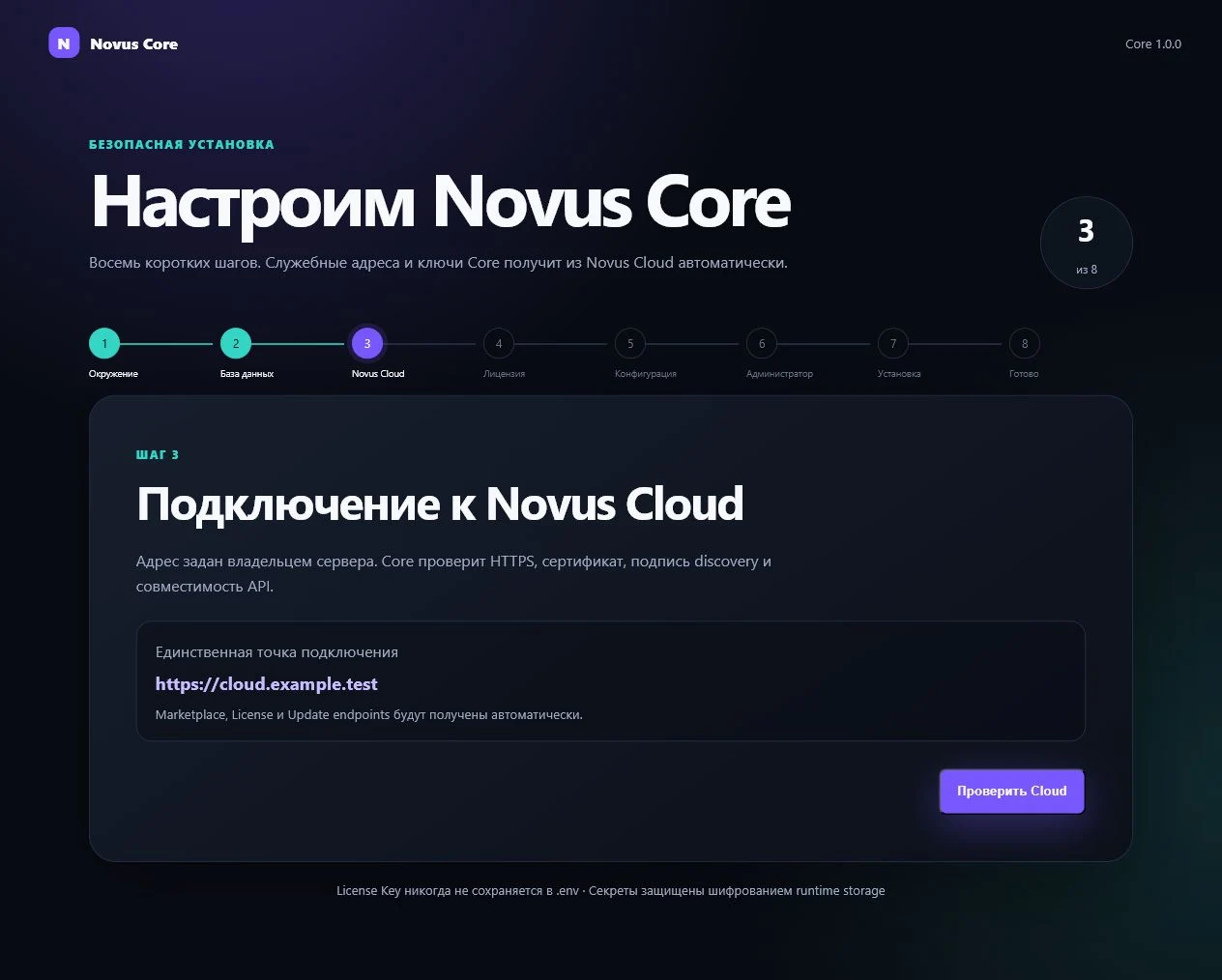
The screenshots capture the early Core 1.0.0 interface. The figures below refer to the current source tree and documented controlled runs.
05 / Boundaries
A module receives only declared capabilities, and the package is validated before its code reaches the active runtime.
Products and modules depend only on the public Extension API, while Core does not import their namespaces.
Required permissions are declared in the manifest and granted separately by the product.
Signature, SHA-256, manifest structure, and dependency graph are validated before installation.
An unsupported API version, owner conflict, or duplicate stable ID stops composition.
06 / Validation
Only reproducible figures are shown here: documented E2E, test tree composition, public contracts, and the CI matrix. These are not business metrics or an SLA.
installation steps completed
public test methods in 103 PHPUnit files
PHP files containing public Core Contracts
variants: SQLite, MySQL, MariaDB, and PostgreSQL
The eight-step E2E was recorded on 20 July 2026 using PHP 8.4.16 and SQLite 3.49.2. The figures 421 and 157 describe the static composition of the current tree; they do not replace a complete release run across all database engines.
07 / Stack
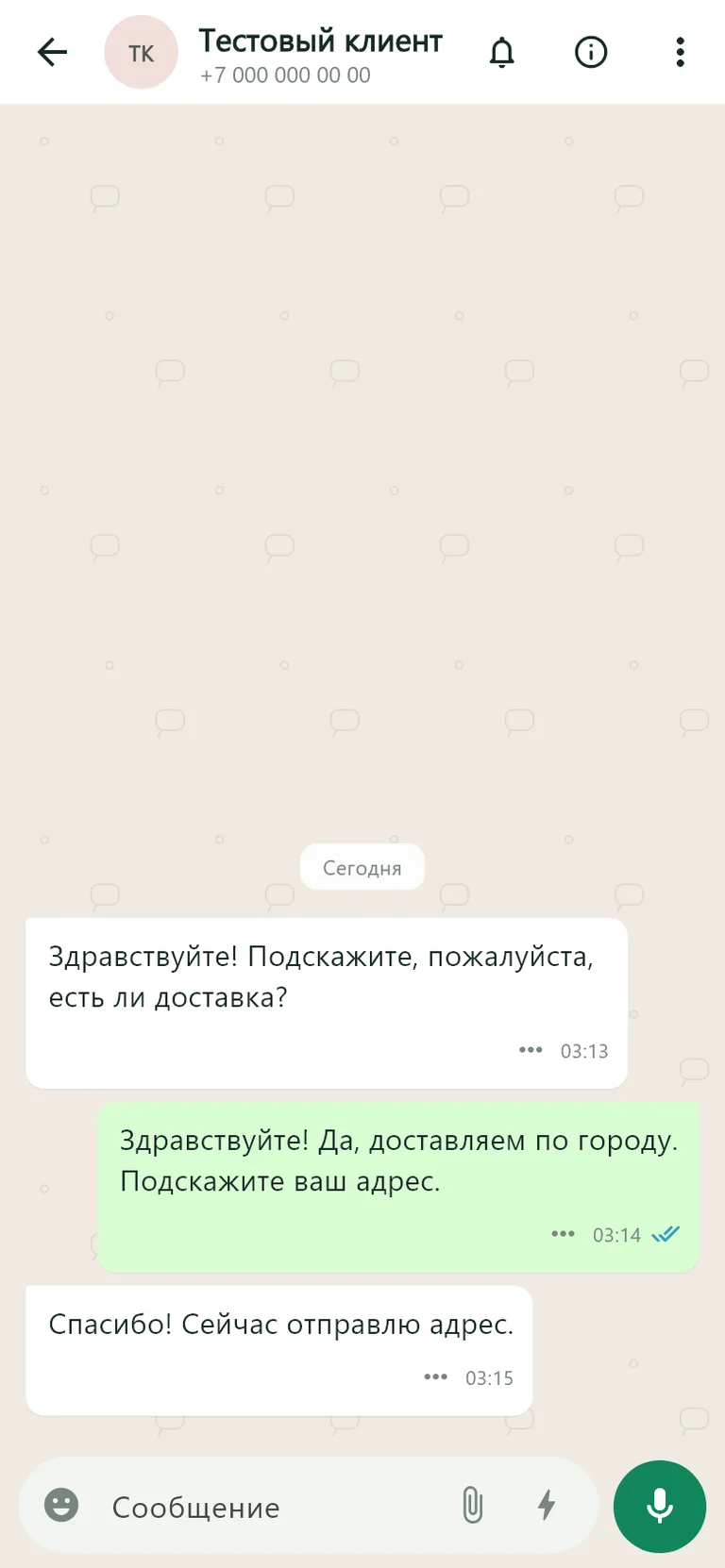
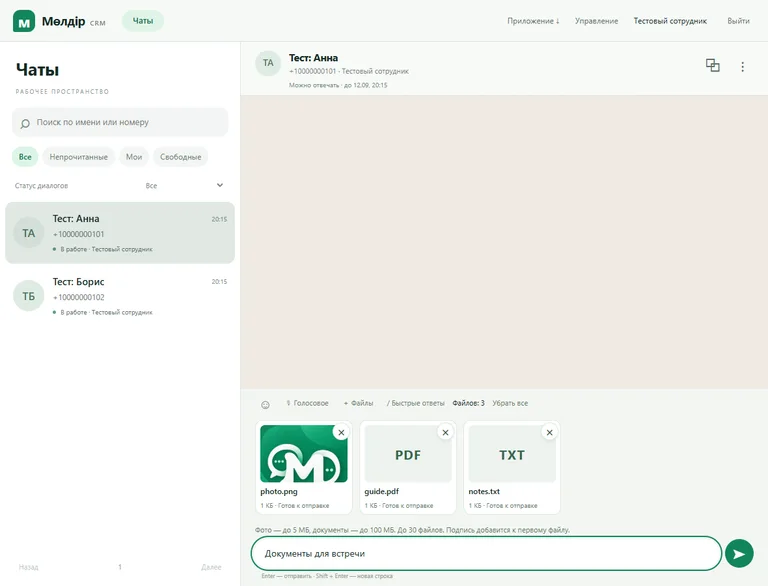
CRM · Android · Website
Customer conversations in one CRM and app.
An education website, web CRM and Android app for a team handling WhatsApp enquiries.
View case study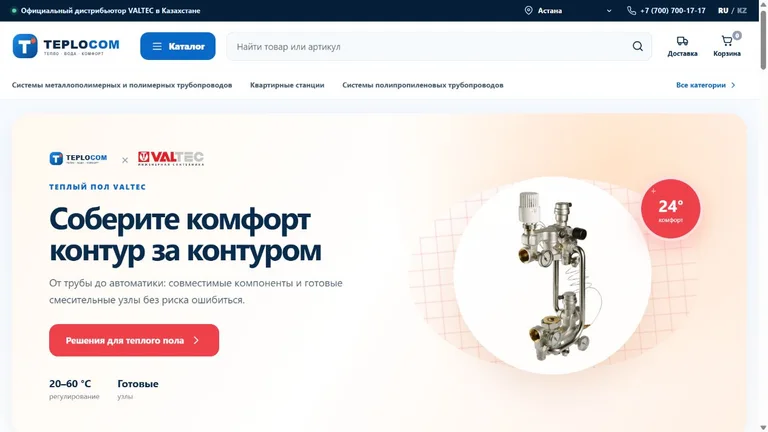
Store · CRM · Automation
Online store and retail operations in one system.
A VALTEC plumbing catalogue, product variants, checkout and a CRM for products, warehouses and delivery.
View case study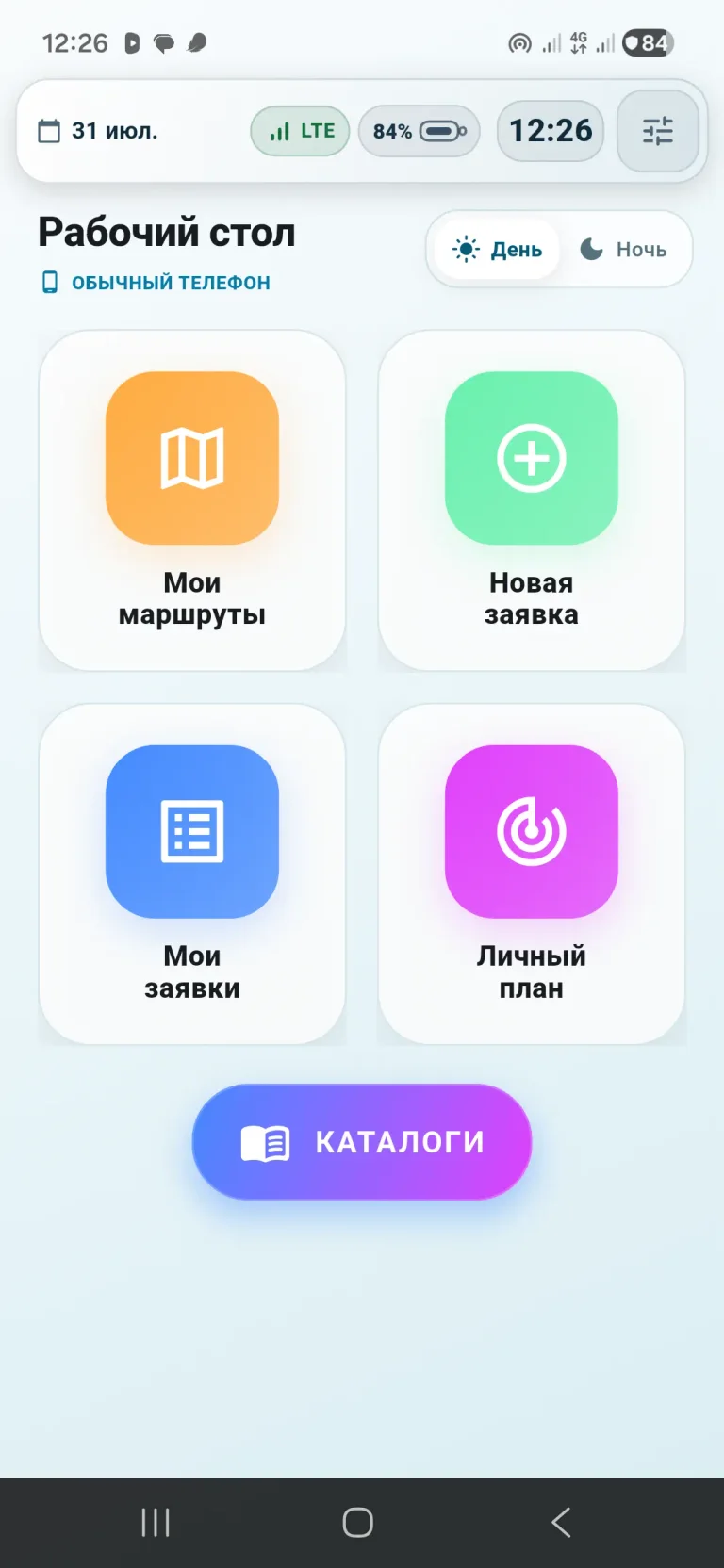
Android · Device management
Manage devices and field teams.
A work app, device policies, routes, orders and 1C integration in one system.
View case study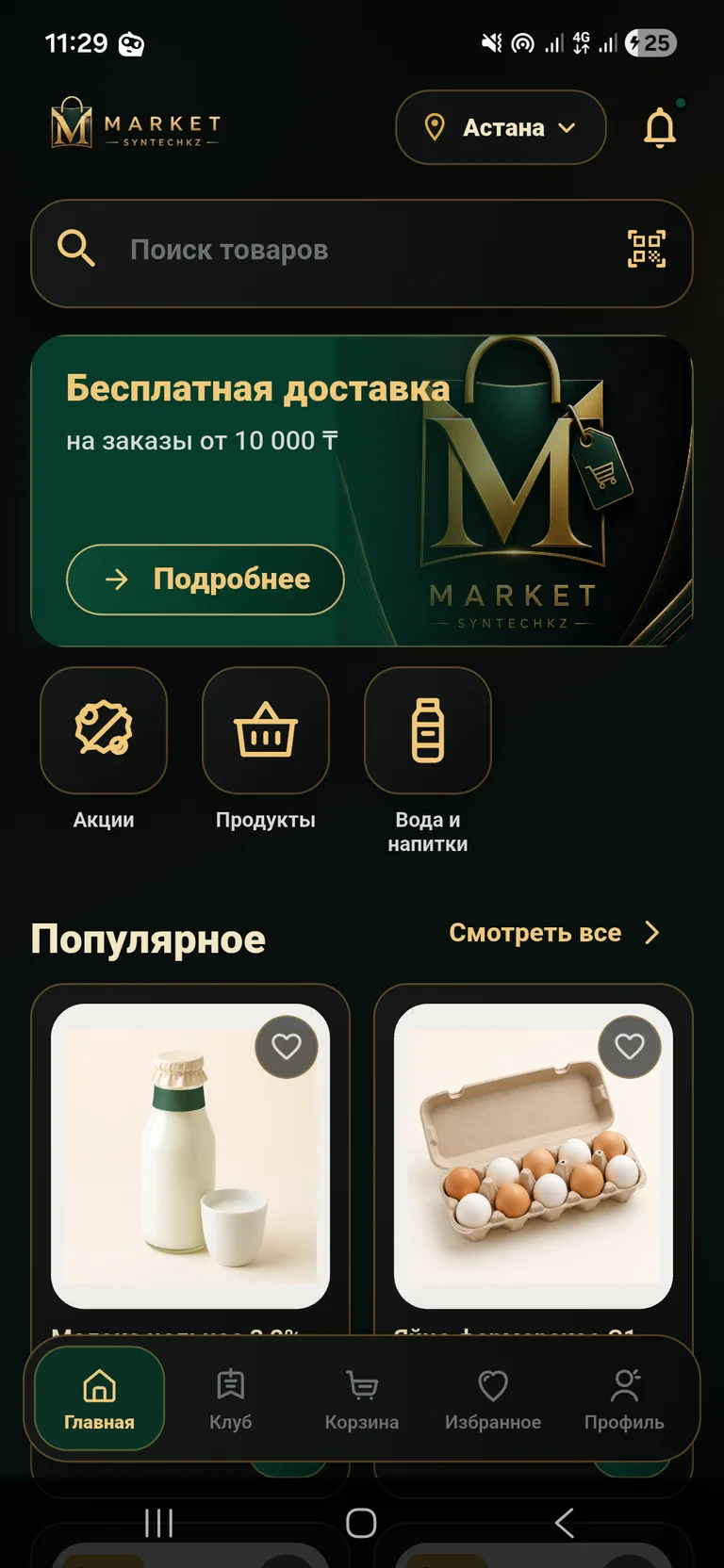
App · Grocery delivery
From choosing groceries to placing a delivery order.
A mobile store with a catalogue, club pricing, cart and order management.
View case study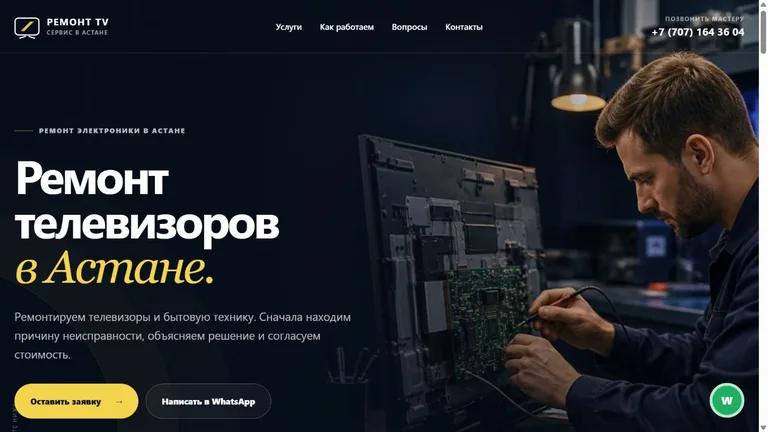
Website · Enquiries · Analytics
A repair service website with a clear enquiry flow.
Repair services, symptom selection, an enquiry form and a dashboard for leads and analytics.
View case study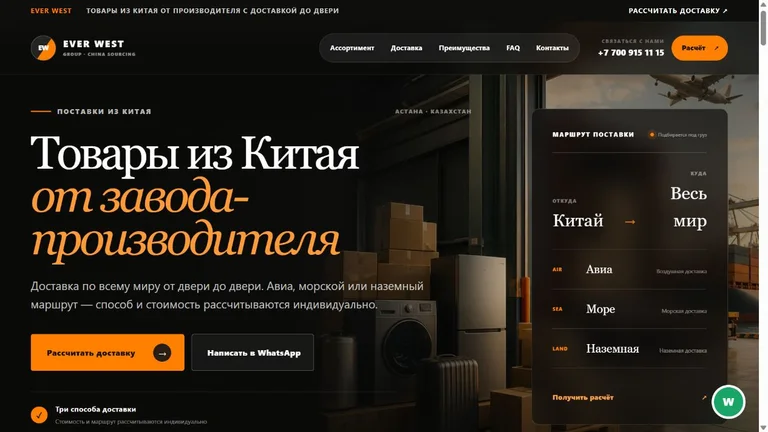
Website · Enquiries · Analytics
A China sourcing website with quote enquiries.
Product categories, delivery options, a quote enquiry form and a dashboard for leads and analytics.
View case studyNeed a platform for a family of products?
We will separate the platform, product, and modules so new functions connect through clear contracts and updates remain manageable.